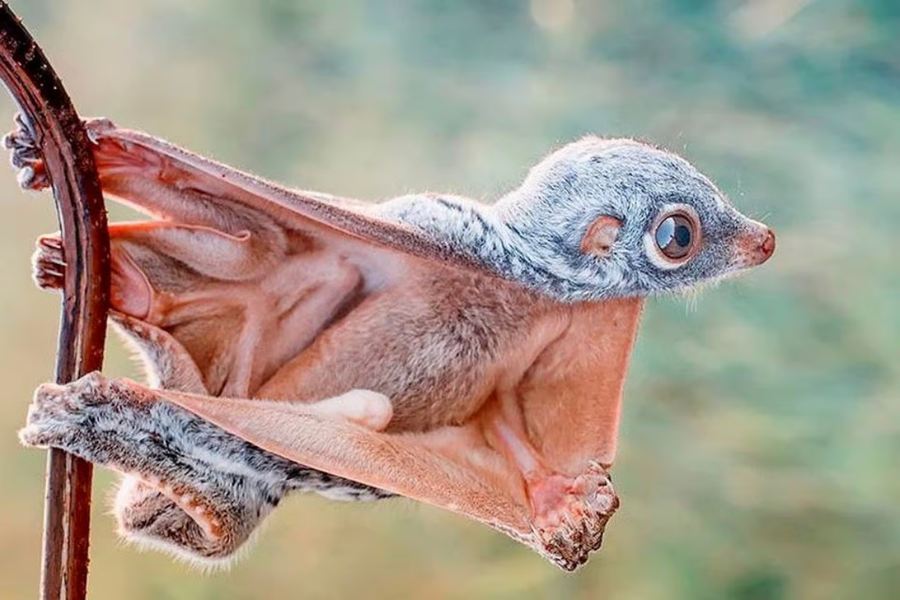
Deep in the dense forests of Southeast Asia, a mammal quietly sails through the tropical canopy.

The World Path Team

Mar 16, 2026 • 7 min read

The Colugo

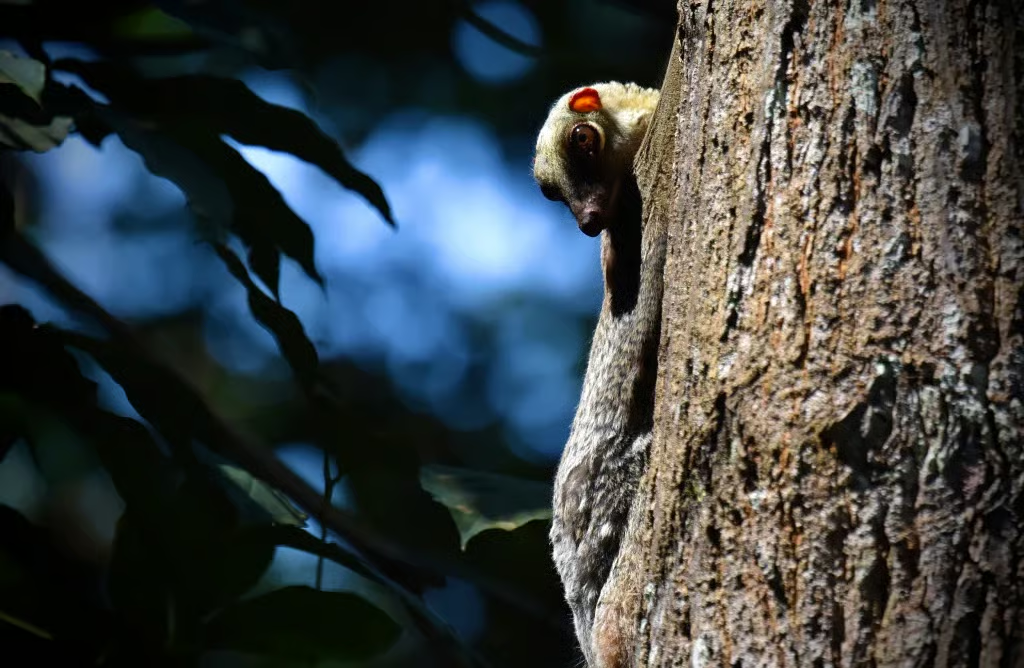
A colugo resting along a branch, its fur-covered gliding membrane folded neatly against its body.

What exactly is a colugo? At first glance it looks like a cross between a bat, a lemur, and a flying squirrel. With large forward-facing eyes, grasping hands and feet, and a wide membrane of skin stretching between its limbs and tail, the colugo is built for life high in the forest canopy.

Colugos belong to the order Dermoptera, a small and distinctive lineage of mammals that today contains just two living species. Despite their nickname “flying lemurs,” they are neither lemurs nor capable of powered flight. Instead, they represent their own evolutionary branch and are considered one of the closest living relatives of primates.

These animals inhabit the tropical forests of Southeast Asia, with populations found in places such as Malaysia, Thailand, Indonesia, and the Philippines. Though only two species are recognized, the Sunda colugo and the Philippine colugo, they occupy a wide range of forest habitats across the region.

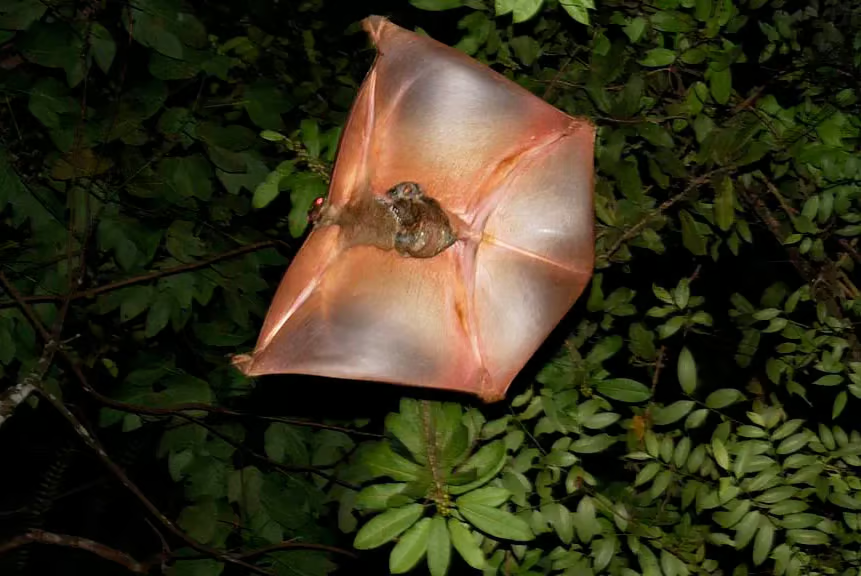
Their most defining feature is an extraordinary membrane of skin, called a patagium, that allows them to glide from tree to tree over impressive distances, sometimes more than 100 meters in a single glide.

A Deeper Dive

Species Stats

• Common Name: Colugo (often called “Flying Lemur”)
• Scientific Order: Dermoptera
• Living Species: 2
• Body Length: ~35–40 cm
• Weight: 1–2 kg
• Habitat: Tropical forests, mangroves, and forest edges
• Range: Southeast Asia, including Malaysia, Indonesia, Thailand, and the Philippines
• Diet: Leaves, flowers, sap, and fruit
• Activity: Mostly nocturnal
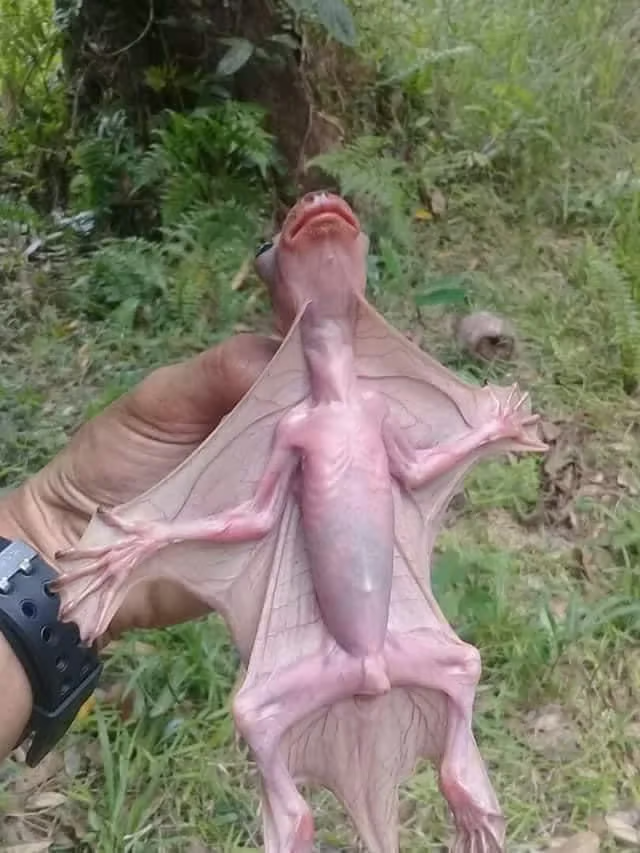
A colugo being held, showing a unique view of its limbs extended. The full span of the colugo’s gliding membrane becomes visible.

Fun Fact: A colugo’s gliding membrane stretches from its neck all the way to the tip of its tail and even between its fingers and toes, making it one of the most complete gliding surfaces found in any mammal.
Anatomical

Built for the Canopy

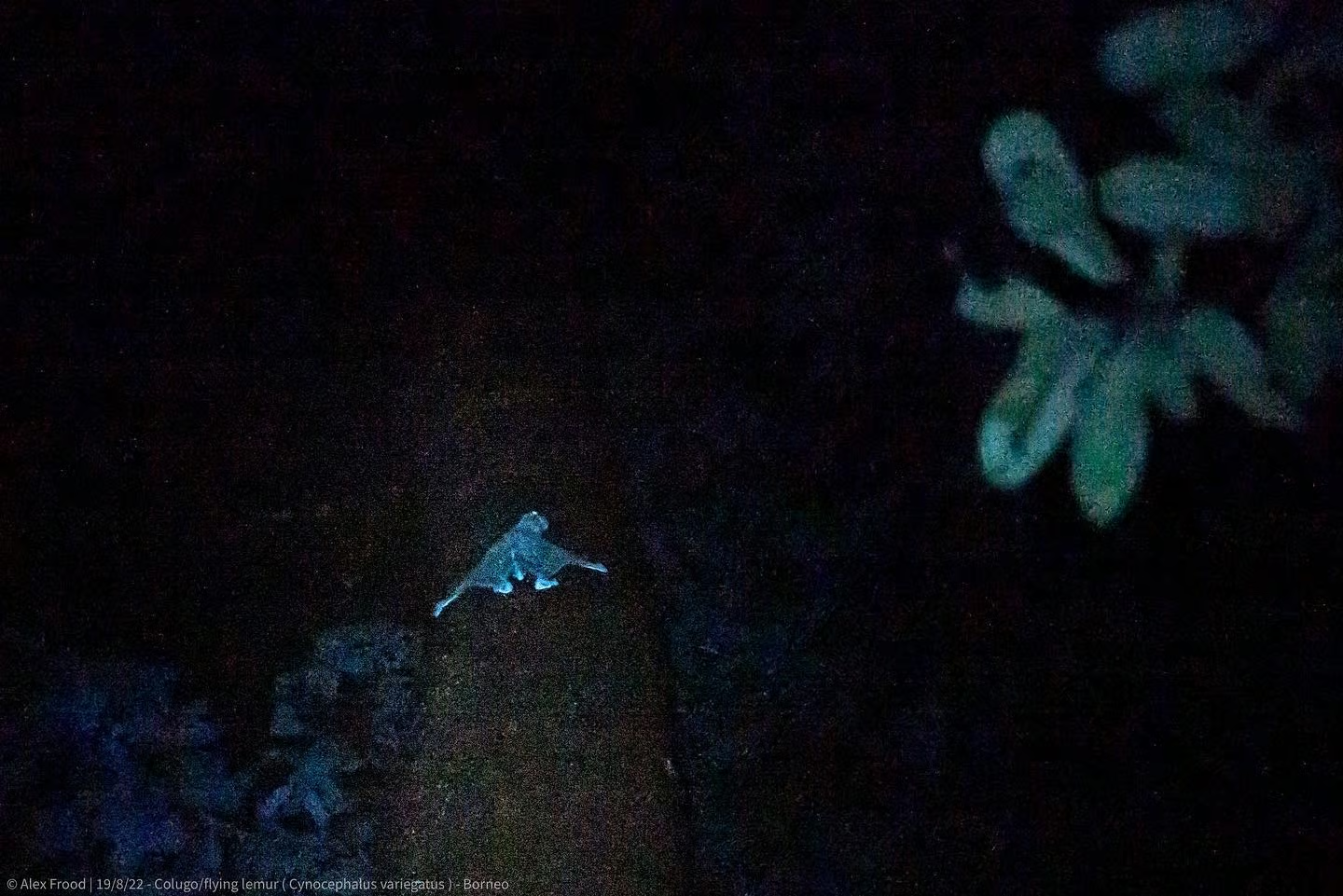
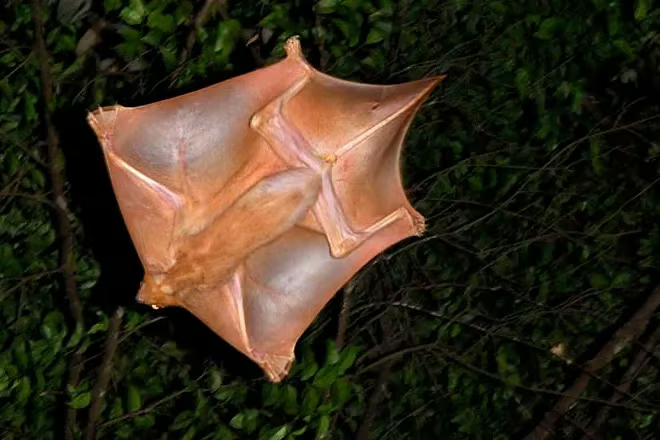
Arms and legs spread wide, a colugo sails between trees using its large skin membrane.


In the dense forests where colugos live, moving through the trees efficiently is essential. Climbing down to the forest floor would expose them to predators and require far more energy.

Instead, the colugo has evolved one of the most impressive gliding systems among mammals.

When it leaps from a tree, it spreads its limbs wide, turning its entire body into a living parachute. The membrane tightens into a smooth surface that allows the animal to glide gracefully through the air, steering with subtle movements of its limbs and tail.

These glides allow colugos to travel long distances without descending to the ground. In a forest where trees are densely spaced, a single glide can carry them over 100m from trunk to trunk with surprising precision.

For an animal that feeds on scattered leaves and flowers, this ability to travel efficiently through the canopy is essential.

Anatomical

The Mammal With a Comb in Its Teeth

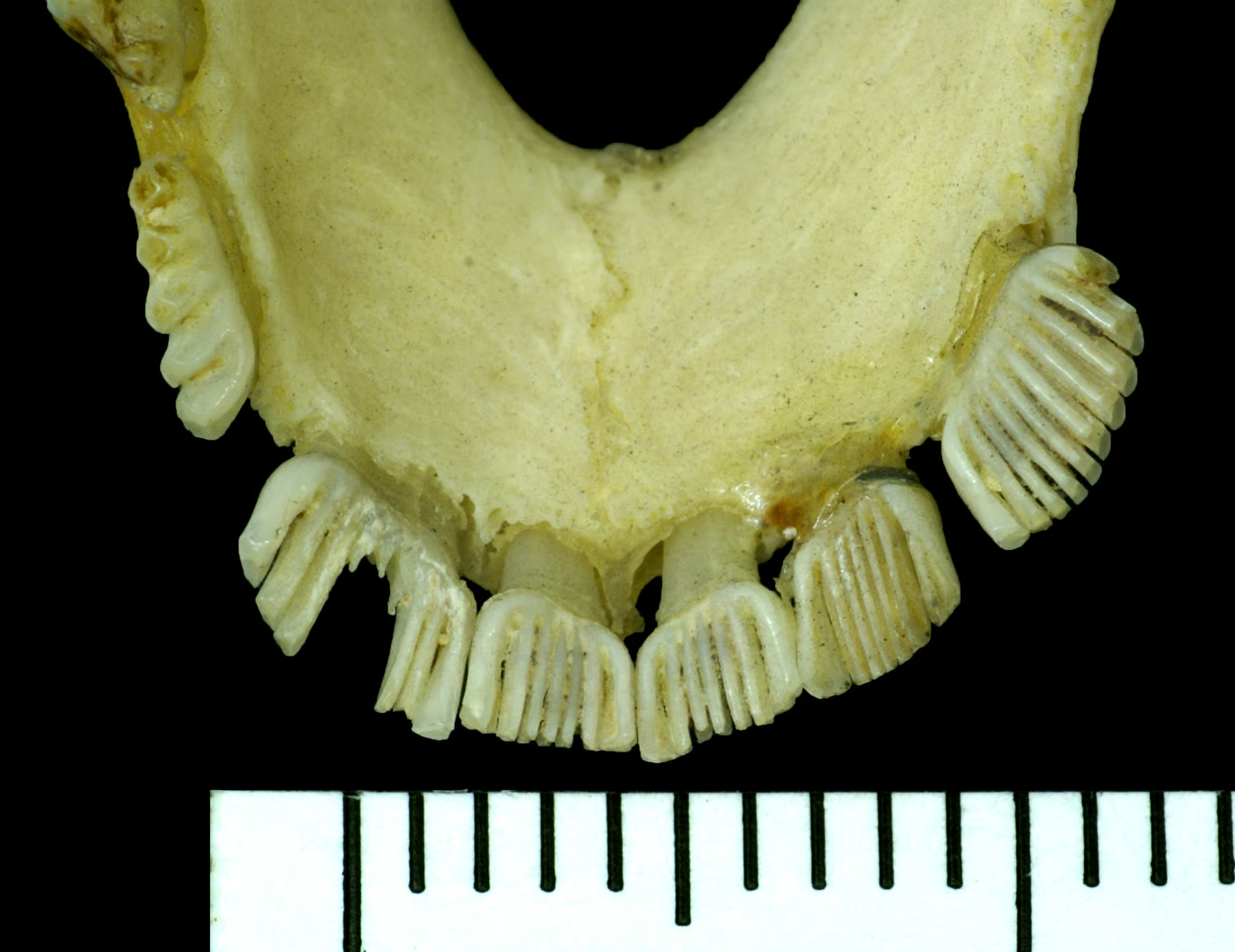
The comb-like teeth of a colugo.


One small detail about colugos often surprises people when they look closely at their skull.

Along their lower jaw sits a very unusual structure known as a tooth comb. The front teeth are narrow and closely spaced, forming a comb-like row with tiny grooves along each tooth. Each tooth can even have multiple slender tips, giving the entire structure the appearance of a delicate grooming tool built directly into the jaw.

This feature serves several purposes. Colugos use the comb to clean and groom their dense fur, removing debris and parasites that accumulate while moving through the canopy. Grooming is especially important for animals that rely on fur condition for insulation and camouflage.

The tooth comb also reflects an intriguing evolutionary connection. Similar grooming combs are found in lemurs and lorises, groups of primates that also spend much of their lives in trees.

Day to Day

Life in the Night Forest

A colugo active beneath the moonlit canopy.


Colugos are primarily nocturnal, emerging after sunset to forage quietly among the trees.

Their large eyes are adapted for low light, allowing them to navigate the dim canopy and locate young leaves, buds, and fruit. Much of their diet consists of tender plant material, which they digest with the help of a specialized stomach suited for processing fibrous foods.

During the day, a colugo typically rests flattened against a tree trunk. Its mottled gray or brown fur blends surprisingly well with bark, providing effective camouflage.

Predators such as arboreal large snakes, owls, and climbing carnivores including civets may hunt them, so remaining still and hidden during daylight hours is an important survival strategy.

Lifecycle

A Mother That Glides With Her Young

LOOK CLOSELY: A mother carries her baby clinging tightly to her underside.

One of the most remarkable aspects of colugo life is how mothers care for their young.

When a baby colugo is born, the mother folds her gliding membrane inward, creating a natural pouch that functions somewhat like that of a marsupial. The infant clings tightly to her belly as she climbs and glides through the forest.

Even during long glides between trees, the baby remains securely attached.

This system allows the young colugo to remain protected while the mother continues moving and feeding across the canopy.

For the Adventurous

How to Spot One

Seeing a colugo in the wild requires patience and a bit of luck.

If you ever visit the forests of Malaysia, Borneo, or the Philippines, your best chance is after sunset. Colugos are most active during the early night hours when they begin searching for leaves and flowers.

Guides often scan tree trunks with a flashlight, looking for two bright reflections from their large eyes.

Another clue is their distinctive silhouette. When resting, a colugo clings flat against the trunk of a tree, its limbs spread slightly and its body blending into the bark.

Occasionally, if you are watching the canopy carefully, you might see a soft shape suddenly glide from one tree to another, a quiet sail through the darkness.

Flattened against a tree trunk high in the canopy, a colugo is spotted with the help of a flashlight.

Natural History

From the Sketchbooks of History

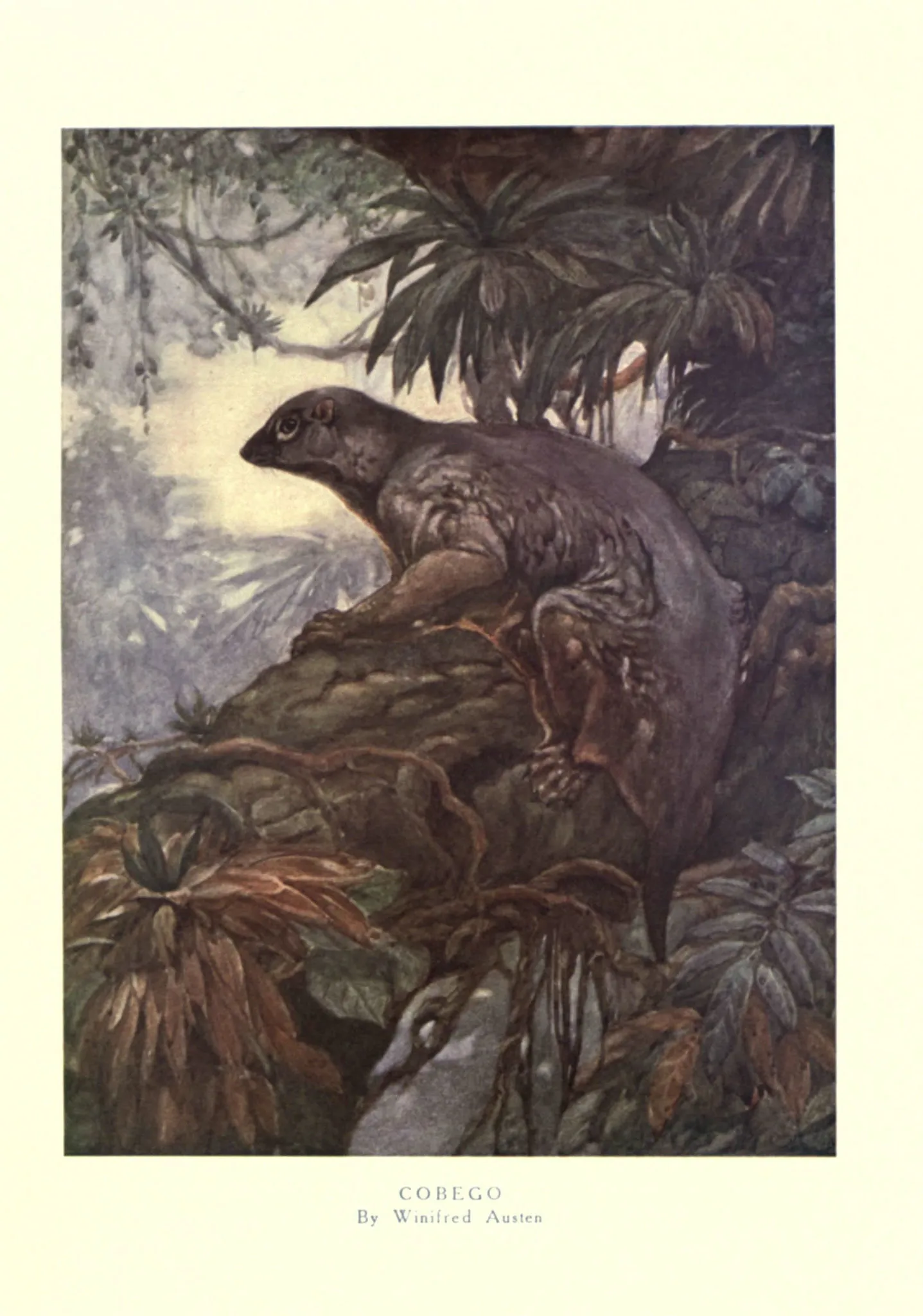
A colugo illustrated in The Wild Beasts of the World (1909).

Quote of the Day

"The longer one observes the natural world, the clearer it becomes that life thrives not through force, but through balance.”