The pistol shrimp is small enough to sit in a teaspoon and loud enough to disrupt military sonar.

The World Path Team

Mar 22, 2026 • 8 min read

The Pistol Shrimp

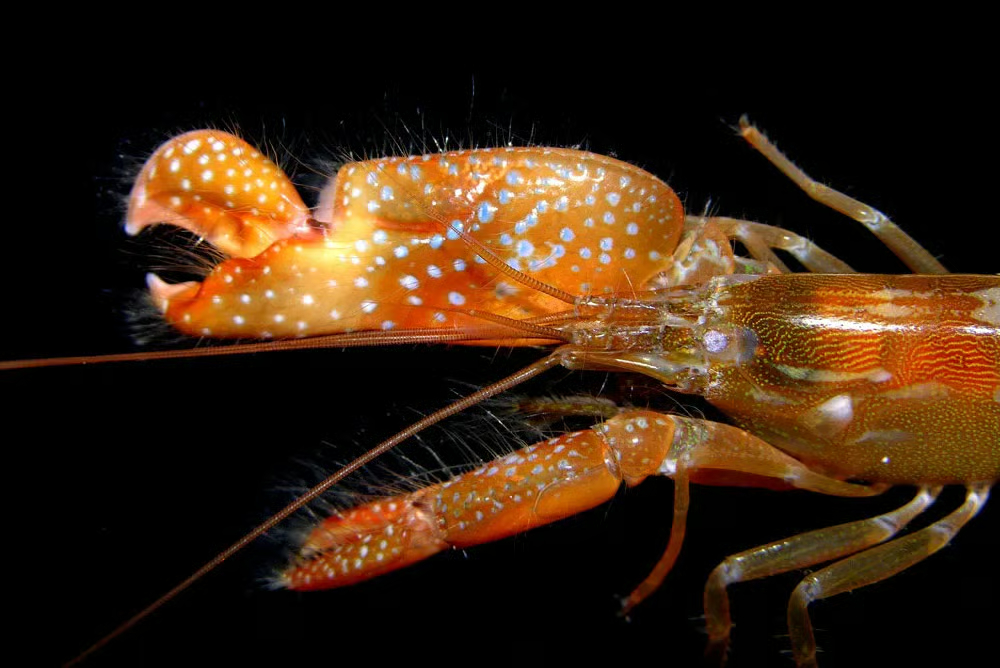
Alpheus sp. the oversized snapping claw visible against the smaller opposing claw.

Relative to its body size, the pistol shrimp produces more destructive force than almost any other animal on the planet.

At 3 cm long, the pistol shrimp is one of the loudest and most mechanically sophisticated hunters in the ocean.. Its most immediate feature is a single oversized claw, often larger than half its body, held on one of its front legs. The other claw is comparatively ordinary. Everything interesting about this animal runs through that one lopsided appendage.

It belongs to the family Alpheidae, within the infraorder Caridea, and sits within a genus, Alpheus, that alone contains over 330 described species. The broader family is diverse and worldwide in distribution, consisting of about 1,119 species within 38 or more genera. Alpheus species are found across tropical and temperate coastal seas worldwide, with greatest diversity in the Indo-Pacific.

Most snapping shrimp dig burrows and are common inhabitants of coral reefs, submerged seagrass flats, and oyster reefs. They are active hunters, foraging for small fish, shrimp, and crustaceans, and many species form monogamous pairs that share and defend a single burrow. Lifespan varies by species but is generally estimated at several years in the wild.

A Deeper Dive

Species Stats

• Genus: Alpheus
Common names: Pistol shrimp, snapping shrimp, cracker shrimp
Size: 3 to 5 cm
Habitat: Coral reefs, seagrass beds, oyster reefs, sandy substrate burrows
Range: Worldwide; greatest diversity in tropical and subtropical coastal waters
Diet: Small fish, crustaceans, opportunistic scavenging
Activity: Daytime
Noted for: Cavitation-based hunting, symbiosis with goby fish
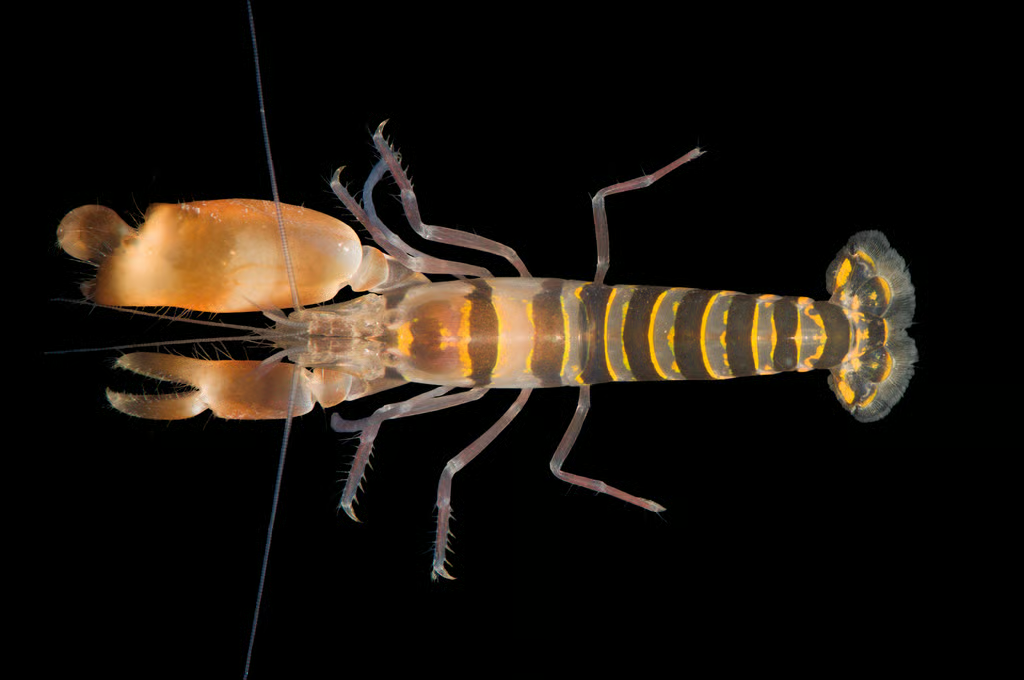
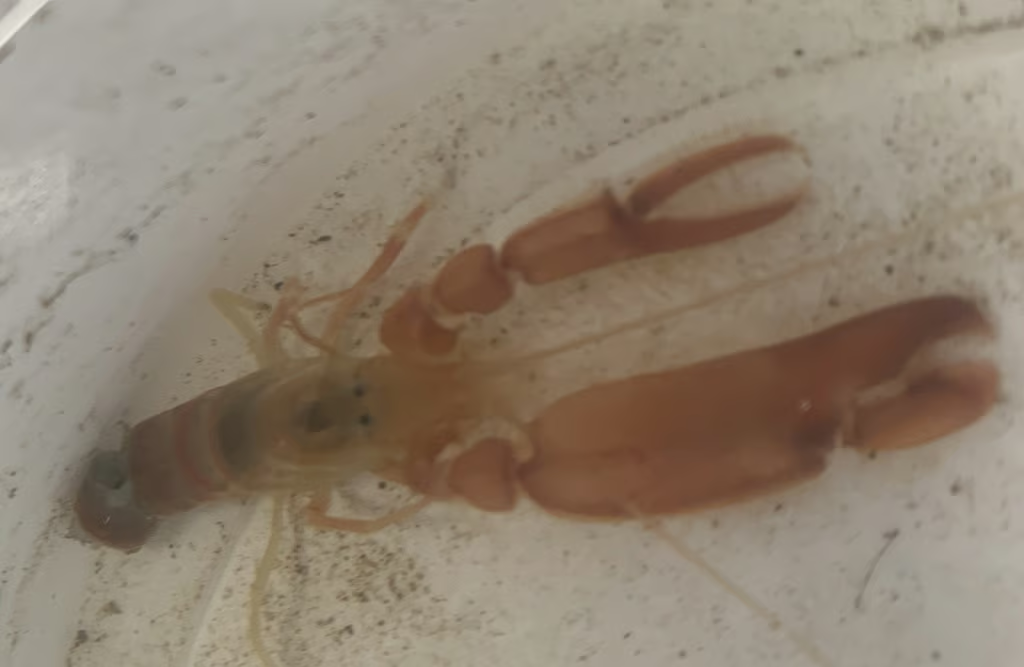
A pistol shrimp under scientific observation, the asymmetry between its two claws clearly visible.

Fun fact: When the snapping claw is lost, the missing limb regenerates into a smaller claw and the original smaller appendage grows into a new snapping claw effectively switching which arm carries the weapon.
Anatomical

One Claw, One Shot


The snapping claw does not crush prey. It does not even make contact. What it does is considerably stranger.

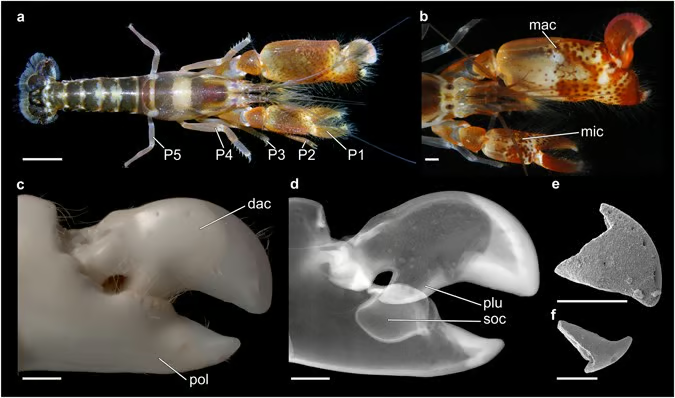
Close-up and X-ray of the snapping claw, showing the internal plunger structure responsible for the mechanism.


When a pistol shrimp opens its claw, water fills into a socket built into the claw structure. A plunger-like component on the other half snaps shut rapidly, ejecting water through small grooves at extremely high velocity. The jet moves fast enough to cause a sudden drop in local water pressure. That pressure drop vaporizes the surrounding water, producing a cavitation bubble.

The bubble expands for a fraction of a second, then collapses violently. In that collapse, temperatures reach as high as 4,800 degrees Celsius and a flash of light appears for as little as 10 nanoseconds. The acoustic pressure reaches 80 kilopascals at a distance of 4 cm, and the water jet travels at 25 meters per second, sufficient to kill a small fish. The resulting snap corresponds to a peak pressure level of 218 decibels, with the duration of the click lasting less than 1 millisecond.

The shrimp fires repeatedly, aiming directly at prey until the target is stunned or killed. In colonies, the collective snapping of thousands of individuals generates enough underwater noise to interfere with submarine sonar systems.

Anatomical

A Mutual Partnership

For all its firepower, Alpheus has a significant liability: its eyesight is very poor, and leaving the burrow to hunt or excavate exposes it to predation it may not detect in time.

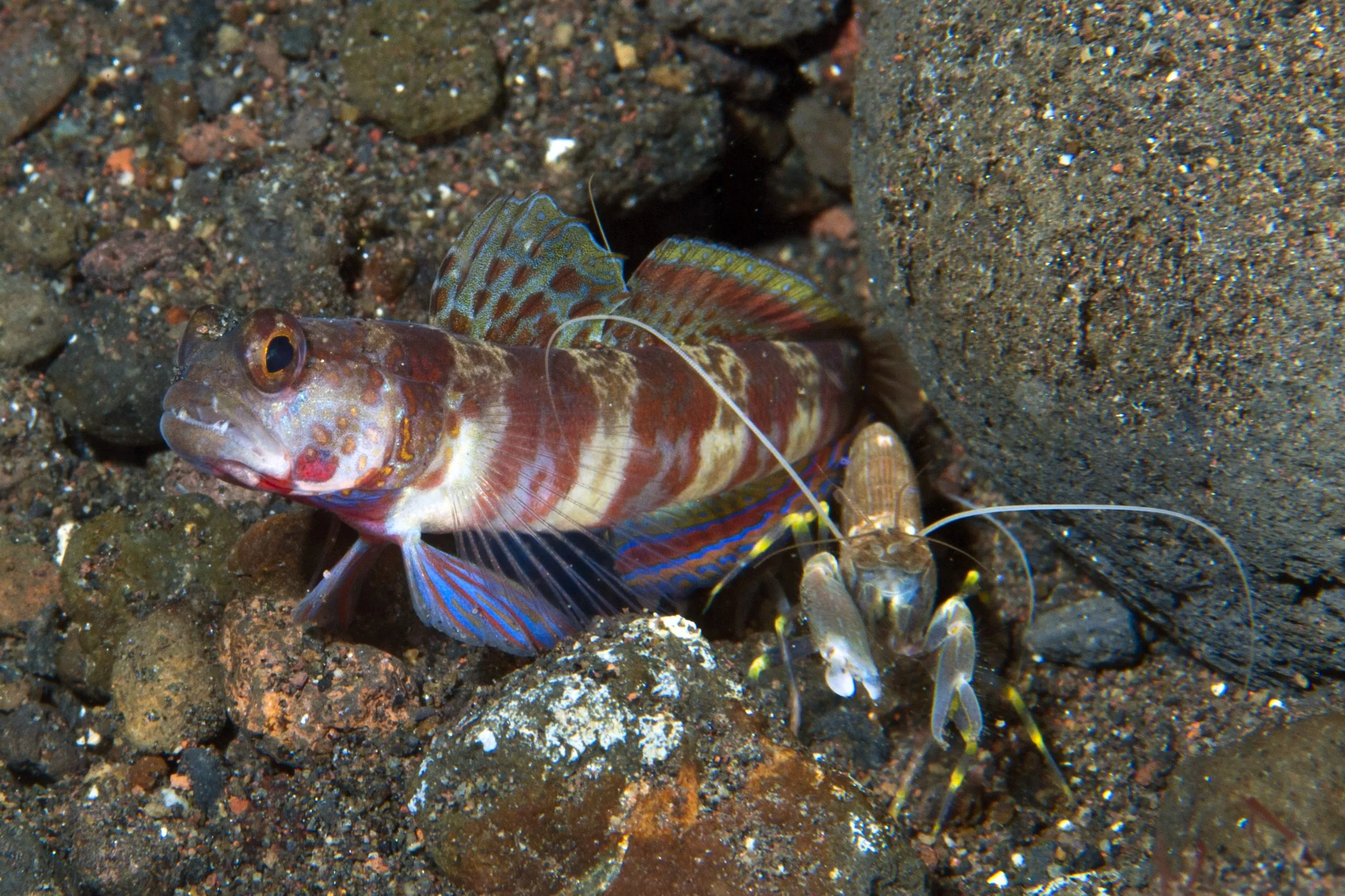
The solution it arrived at is one of the better documented examples of mutualism in marine biology. Numerous Alpheus species pair with goby fish in a arrangement that benefits both animals. The burrow is built and maintained by the pistol shrimp, and the goby provides protection by watching for danger.

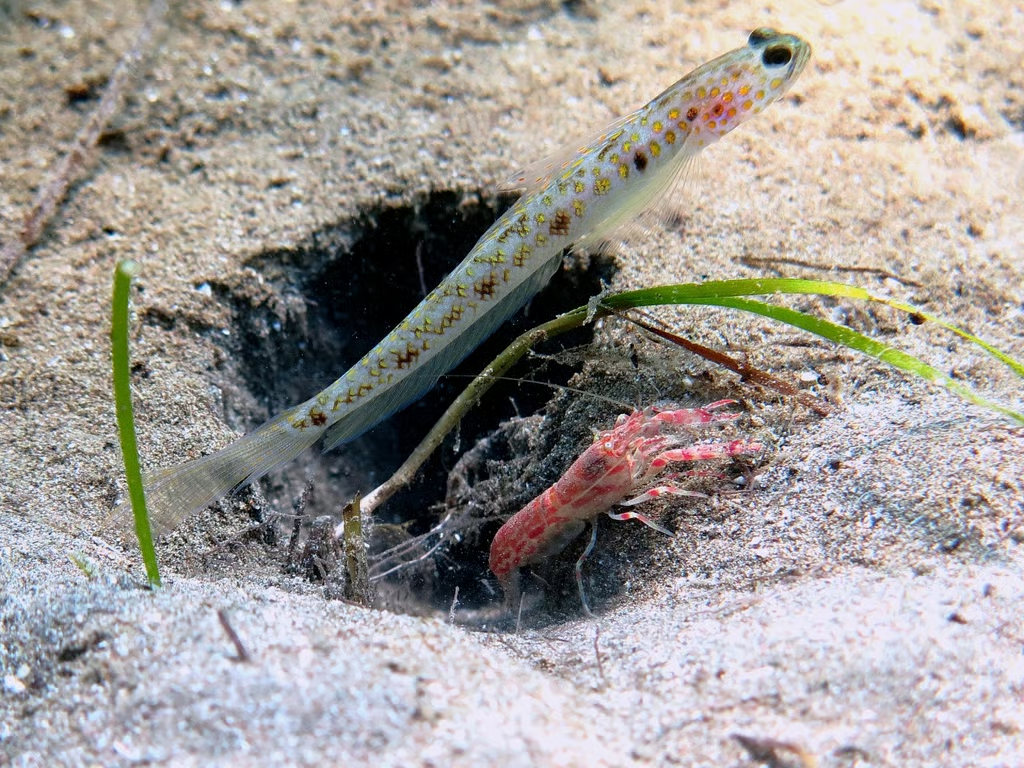
When both are outside the burrow, the shrimp maintains antennal contact with the goby's tail, allowing the goby to signal danger through a characteristic tail movement, and both retreat into the burrow.

An Alpheus shrimp maintaining antennal contact with its goby partner at the burrow entrance.


The specificity of these pairings is notable. Some species, such as Alpheus bellulus, are not found in areas where their partner goby fish is absent and will not exit the burrow while the partner fish is not near the entrance. Neither animal does particularly well in the absence of the other.

Adaptation

Alternating Claw Regeneration


If an Alpheus shrimp loses its snapping claw, it does not simply regenerate it. The smaller claw on the opposite side grows into a new snapping claw, fully functional, while a new small claw regenerates where the original snapper was.

The weapon effectively changes arms. This is not a workaround, it appears to be a hardwired response, and it means the animal is never permanently disarmed by injury. For a hunting strategy this dependent on a single anatomical feature, that redundancy matters.

Regenerated snapping claw on the opposite side, the original smaller claw visible beside it.

Lifecycle

The Sound of a Healthy Reef


Put your head underwater in almost any tropical or subtropical coastal area and you will hear a continuous, static-like noise filling the water.

Many people who notice it wonder what is its’s source. It is pistol shrimp.The collective sound has been described as frying fat, burning twigs, or pop rocks a constant, ambient crackle generated by thousands of individuals snapping simultaneously across the reef. Have you heard it while snorkeling and not known what it was?

Researchers have found this noise to be genuinely useful. Snapping shrimp abundance closely tracks coral cover more and larger coral colonies support more shrimp, meaning the volume of snapping can be used as a proxy for reef structure and health. This makes acoustic monitoring a practical, non-invasive alternative to daytime scuba surveys, one that can run continuously, through the night, and across seasons without a diver in the water.

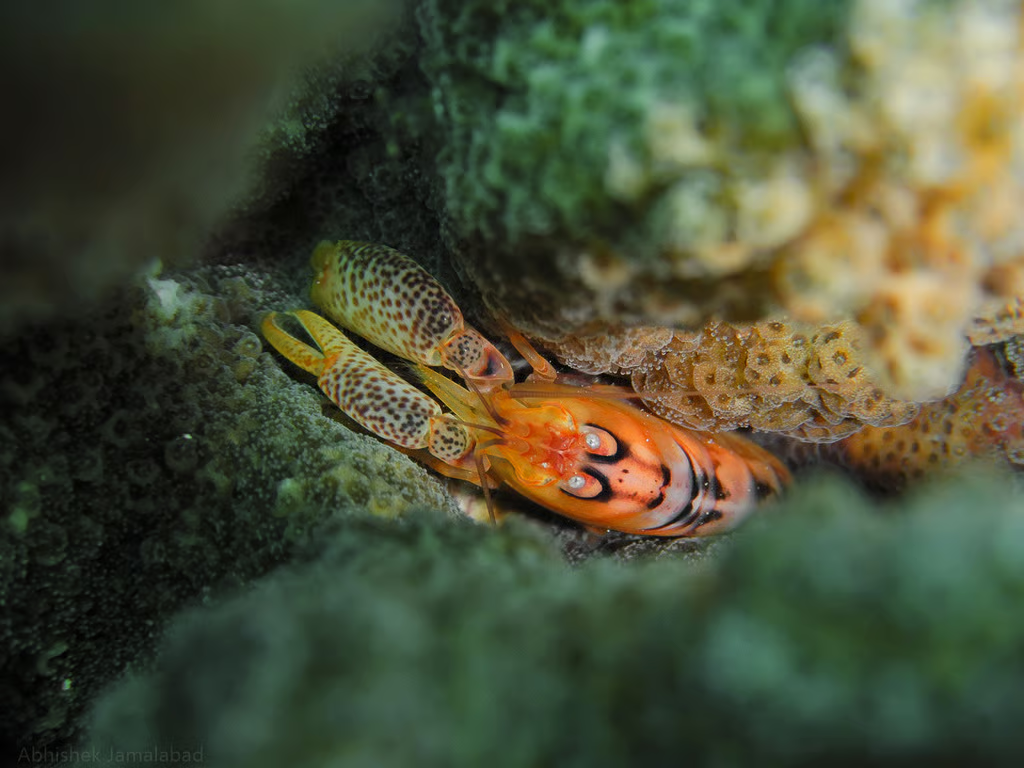
A  Coral Snapping Shrimp (Alpheus lottini) on shallow reef structure, the source of the crackling audible throughout.


The source of the crackling was actually a mystery until World War II, when naval investigations into the interference discovered that colonies of small shrimp were responsible. A quieter reef is now understood as a warning sign.

For the Adventurous

How to Spot One


Alpheus species are among the most widely distributed crustaceans in shallow tropical and subtropical seas, which means they are genuinely accessible from a wide range of destinations.

Snorkelers in the Florida Keys, the Red Sea, the Great Barrier Reef, or virtually any shallow Indo-Pacific reef system are almost certainly hearing them already. The crackling, bacon-frying sound audible just below the surface in calm, shallow water near reef structure is their collective output. No diving certification required.

For those who want to see one rather than just hear the colony, look for active burrow entrances in sandy patches adjacent to reef, particularly where a small goby is sitting motionless at the opening. The shrimp will be just inside or working at the entrance, shifting sediment. Early morning and late afternoon tend to be periods of higher activity. Shallow, sheltered bays with mixed sand and reef substrate are the most reliable habitat to search.

A goby stationed at a sandy burrow entrance, its Alpheus partner working just below the surface.

Natural History

From the Sketchbooks of History

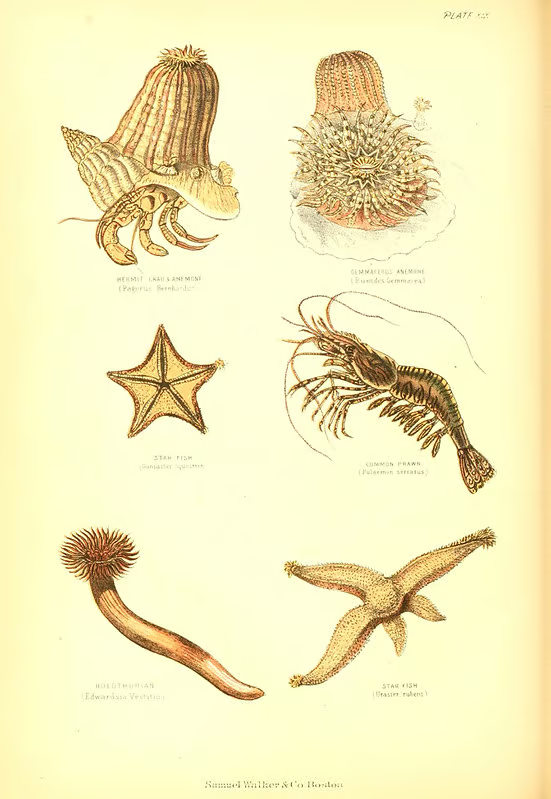
Plate from The Living World, Samuel Walker & Co., Boston, 1868.

Six marine invertebrates illustrated: Hermit Crab and Anemone (Pagurus sp.), Gemmarous Anemone (Bunodes gemmaceus), Star Fish (Goniaster squamatus), Common Prawn (Palaemon serratus), Holothurian (Edwardsia vestita), and Star Fish (Oreaster rubens). Published as part of a popular natural history series aimed at general audiences, a decade before formal zoological illustration became standardized.

Quote of the Day

"When we step back and look carefully, the world often becomes larger and our worries smaller”