Extreme adaptations: buried beneath the sand, armed with venom and electricity

The World Path Team

Apr 1st, 2026 • 6 min read

The Stargazer

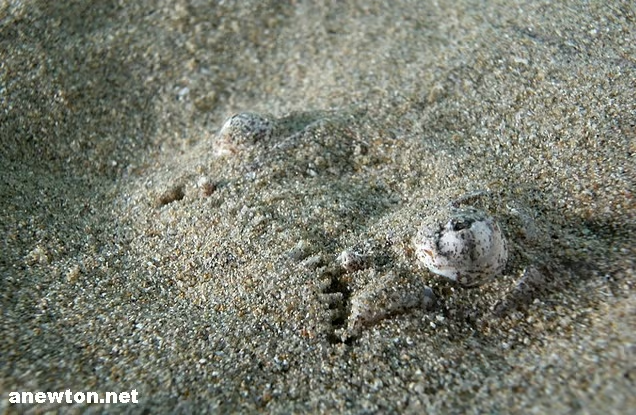
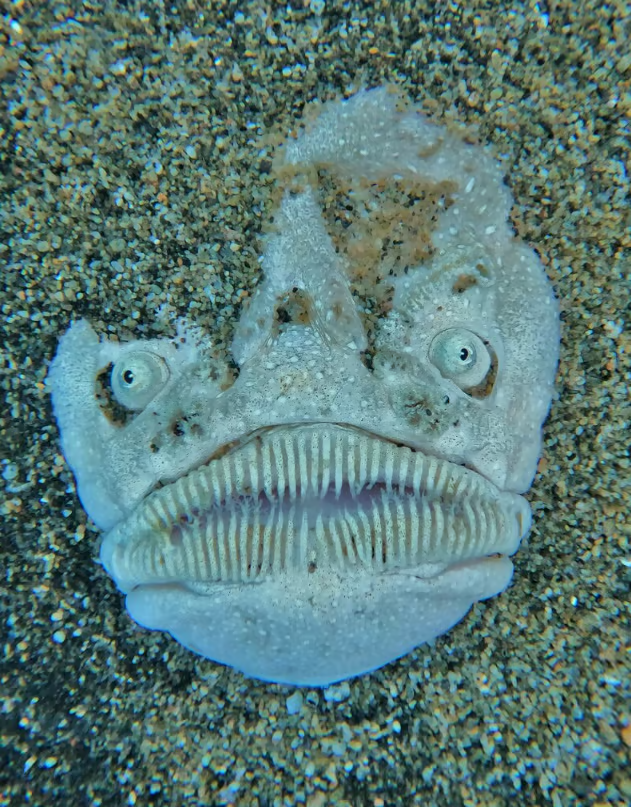
A stargazer partially buried in the seafloor, with only its eyes and mouth exposed, an ideal position for detecting prey swimming overhead.

At first glance, stargazers look like something dreamed up for a monster movie, but these bottom dwelling fish are very real. They belong to the family Uranoscopidae, a group within the order Perciformes, and are part of a broader lineage of benthic, ambush-oriented marine fishes that have adapted to life buried in sediment.

Today, roughly 50 species of stargazers are recognized worldwide. They occur in temperate and tropical oceans across the globe, inhabiting both shallow coastal waters and deeper continental shelf habitats.

Across this range, stargazers play a consistent ecological role as sedentary ambush predators, spending much of their lives concealed beneath sand or mud. Their bizarre anatomy and extreme adaptations make them one of the strangest predators on the seafloor.Stargazers have earned a fierce reputation. One ichthyologist famously called them “the meanest things in creation,” and their grimacing, upward stare has often been compared to a gargoyle’s face.

A Deeper Dive

Species Stats

• Common name: Stargazer
• Family: Uranoscopidae
• Typical size: 18–56 cm, depending on species
• Habitat: Sandy or muddy seabeds, from shallow coastal zones to deep shelf waters
• Global range: Atlantic, Pacific, and Indian Oceans
• Lifestyle: Sit-and-wait ambush predator
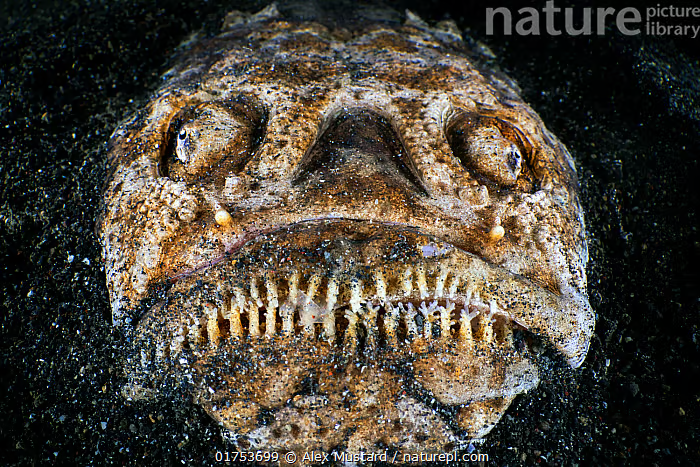
A stargazer partially buried in the seafloor, with only its eyes and mouth exposed, an ideal position for detecting prey swimming overhead.

Fun fact: Despite their scary appearance, they are eaten in some cultures. They are often called "monkfish" or "poor man’s lobster" and have firm, white meat.
Anatomical

Built for Life Beneath the Seafloor

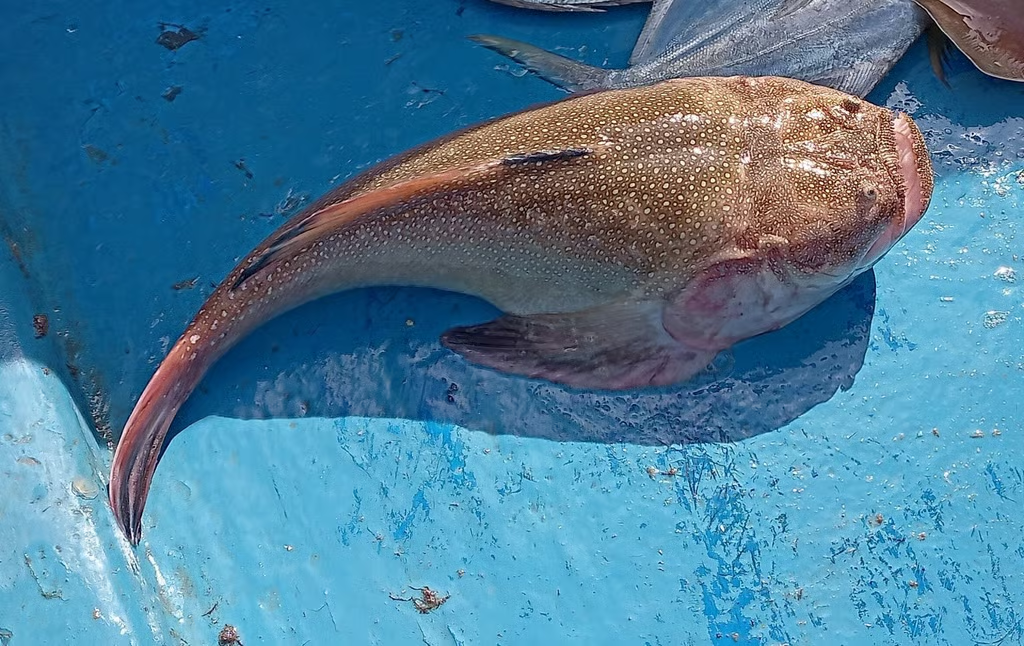
A stargazer brought aboard a fishing boat, showing its full body shape and large, powerful pectoral fins used for rapid burial in sand.


Stargazers are shaped by their environment in direct, functional ways. Their eyes, nostrils, and mouth all face upward, allowing the fish to remain completely buried while still breathing and watching for prey.

Using powerful pectoral fins, they can disappear beneath loose sediment in seconds. Once concealed, only subtle eye movement or a slight mouth opening gives away their presence.

This body plan allows them to occupy a niche with minimal energy use. Rather than chasing food, stargazers let the environment bring prey to them.

Living buried presents a challenge: how do you breathe without inhaling sand?

Stargazers solve this by drawing water in through their nostrils, rather than their mouths. These nostrils are protected by comb-shaped, fringed structures that filter out sediment, allowing the fish to breathe while remaining completely hidden.

Defense and Attack

A Fish That Can Shock and Sting

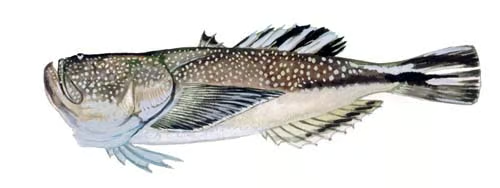
Illustration detailing the stargazer’s flattened body, upward-facing mouth, and venomous spines positioned near the gill covers and pectoral region.


Stargazers are among the few fish on Earth that are both electric and venomous, a rare and intimidating combination.

Some species, including the northern stargazer, generate electrical shocks using a specialized organ made from modified eye muscles. These shocks, reaching up to 50 volts, are used as a defensive weapon against predators.

As if that weren’t enough, stargazers also carry venomous spines near their gills and pectoral fins. A careless step or grab can result in an extremely painful sting. Strangely, despite producing electricity, stargazers cannot sense electric fields, making them unique among electric fish.

Defense and Attack

Built for the Perfect Ambush

A stargazer nearly invisible beneath the sand, demonstrating its remarkable camouflage and sit-and-wait hunting strategy.


Everything about a stargazer’s body is designed for one purpose: ambush.

Their eyes, nostrils, and mouth all face upward on a flattened head, allowing them to lie buried beneath the sand while keeping watch above. Using powerful pectoral fins, they can disappear beneath the seabed in seconds, leaving only their eyes exposed.

When prey swims overhead, the attack is instant. Stargazers can strike and swallow prey in less than 30 milliseconds, making their ambush one of the fastest in the ocean.

For the Adventurous

How to Spot a Stargazer

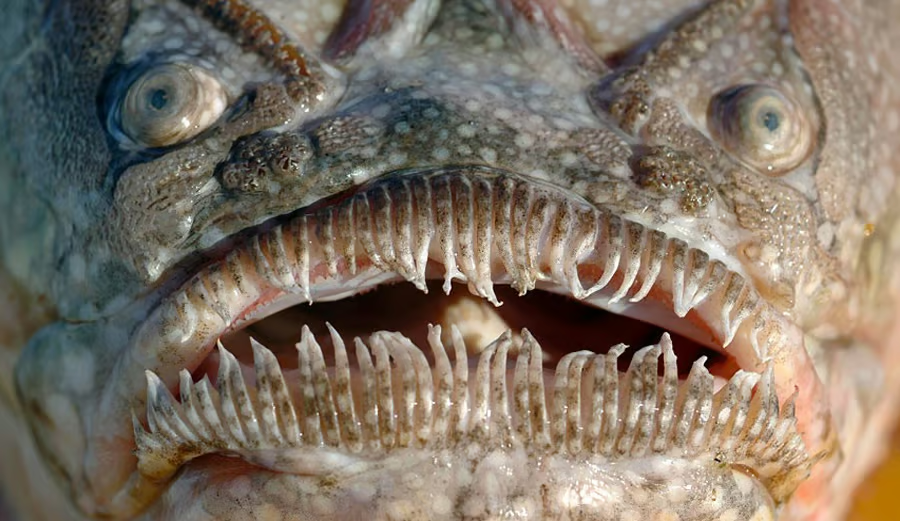
The ragged, frilled appearance of their lips helps break up the outline of the mouth, making them even more invisible to prey.


Stargazers are easiest to find when you slow down and look for what feels slightly out of place.

They favor open sandy or muddy bottoms, often near reefs, seagrass edges, or gentle slopes where loose sediment allows them to bury quickly. Rather than searching for a fish-shaped outline, look for subtle signs: a shallow sand depression, two eyes breaking the surface, or a faint outline of a mouth pointing straight upward.

Some of the best opportunities come from muck diving destinations such as Lembeh Strait, where fine volcanic sand and low-relief habitats make ambush predators easier to detect. In these environments, patient observation often reveals stargazers sitting motionless beside burrows, discarded shells, or small debris fields.

If you are snorkeling or diving in shallow coastal areas, scan sandy patches between reef structures rather than the reef itself. Stargazers rarely move unless disturbed, so spotting them is more about pattern recognition than motion.

Natural History

From the Sketchbooks of History

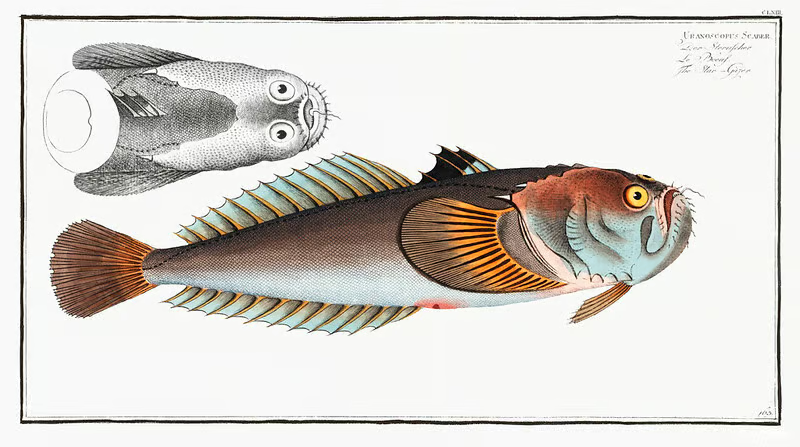
Star-Gazer (Uranoscopus scaber) from Ichtyologie, ou, Histoire naturelle, générale et particulière des poissons (1785–1797) by Marcus Elieser Bloch (1723–1799), illustrating early efforts to document and classify marine species through detailed observation.

Quote of the Day

"Curiosity is the only tool you need to make the world astonishing again."